Shanghai, 9 September 2014
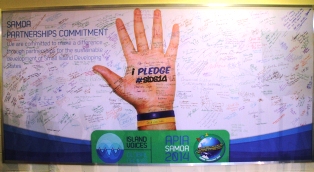 The Third International Conference on Small Island Developing States (SIDS) took place from 1-4 September 2014 in Apia, Samoa, on the theme of ‘The Sustainable Development of SIDS Through Genuine and Durable Partnerships.’ In parallel with plenary discussions, six multi-stakeholder Partnership Dialogues took place on the themes of: sustainable economic development; climate change and disaster risk management (DRM); social development, health and non-communicable diseases (NCDs), youth and women; sustainable energy; oceans, seas and biodiversity; and water and sanitation, food security and waste management. Many countries and organizations announced new pledges and partnerships. Forums organized by youth, Major Groups and other Stakeholders, the renewable energy sector and the private sector took place prior to the conference.
Twenty-one heads of state and government and 3,500 delegates attended the conference, including representatives from government, the private sector and civil society. Alongside the formal proceedings, many side events took place on issues of importance to SIDS, such as graduation from least developed country (LDC) status, concessional financing, scientific monitoring and assessment, and resilience building. The conference was also an occasion to highlight the cultural traditions of the host country, Samoa, and other island nations, with daily displays of traditional dance, textiles, woodcarving and other crafts in the ‘SIDS Village’ located at the conference venue.
The Conference produced an outcome document, titled ‘SIDS Accelerated Modalities of Action (SAMOA) Pathway,’ which was negotiated during the preparatory process at UN Headquarters in New York, US, and adopted during the closing plenary. The SAMOA Pathway recognizes that transportation and mobility are central to the sustainable development of SIDS and can enhance economic growth, promote trade opportunities and improve accessibility. It also recognizes the importance of the efficient movement of people and goods to fully engage in local, regional and global markets, and the potential of sustainable transport to improve social equity, health, resilience of cities, urban-rural linkages and productivity of rural areas of SIDS.
The SAMOA Pathway commits to continuing and enhancing support for SIDS efforts to: access environmentally sound, safe, affordable and well-maintained transportation; advance the safety of land, sea and air transportation; develop viable national, regional and international transportation arrangements, including improved air, land and sea transport policies that take a life-cycle approach on the development and management of transport infrastructure; and increase energy efficiency in the transport sector.
Read more: http://climate-l.iisd.org/news/sids-conference-concludes-with-297-partnerships-adoption-of-outcome-document/