
Transport by Numbers
The SLOCAT Transport, Climate and Sustainability Global Status Report– 4th Edition reveals the stark realities — and urgent opportunities — that currently shape global transport systems.
Check out below some of GSR’s key numbers and facts, and the full report here.
-
 Transport’s Critical Role and Scale of Impact
-
 Decarbonisation Progress is Incremental but Uneven
-
 Inequalities and Access Gaps
-
 Climate Impacts are Rising Costs and Risks for Transport Systems
-
 Car-centric Systems Impose High Costs for People and the Planet
-
 Investment Gaps Hamper a Just Transition


Transport’s Critical Role and Scale of Impact

The transport sector produced 7% of the global GDP and employed 193 million people worldwide in 2021.

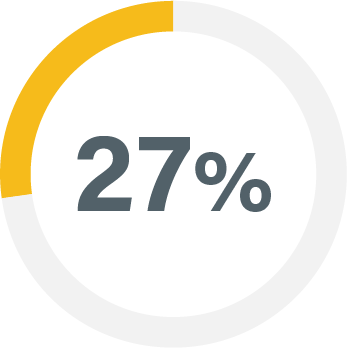
The transport sector consumed a third (27%) of the global energy for end-uses in 2023 – the fastest growing energy-consuming sector.

95.4% of energy used in transport still comes from fossil fuels — this has barely changed in 50 years and is directly linked to the high emissions and air pollution from transport.
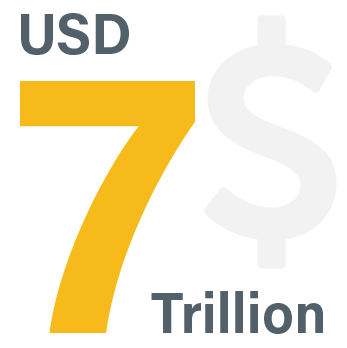
Fossil fuels subsidies (implicit and explicit) totalled around USD 7 trillion or 7.2% of global GDP in 2023.

A handful of mostly high-income countries continue to contribute the highest absolute and per capita emissions, while LMICs bear the impacts and have not received sufficient financing for a just transition in transport.
Europe, North America and Oceania continued to contribute the highest per capita transport GHG emissions in 2023. The US remained the highest transport emitter globally in absolute emissions and the fifth highest in per capita emissions.

Freight transport and logistics was responsible for around 12% of energy-related global CO2 emissions and accounted for 43% of global CO2 emissions from the transport sector (including international aviation and shipping) in 2023, with this share expected to reach 57% by 2050.
Decarbonisation Progress is Incremental but Uneven

Road transport electrification continued its surge; electric car sales rose 25% in 2024, yet EVs still make up under 5% of cars worldwide.

68 countries and 26 states/provinces now have EV targets; 49 countries aim for 100% EV sales or bans on internal combustion engines but most are off track to meet them.

40 countries have committed to achieve 100% new electric truck and bus sales by 2040, with an interim 2030 target of 30%.

Electric two- and three-wheelers lead electrification – nearly 400 million units globally in 2024, rapidly electrifying modes of informal transport, mostly in Asia.
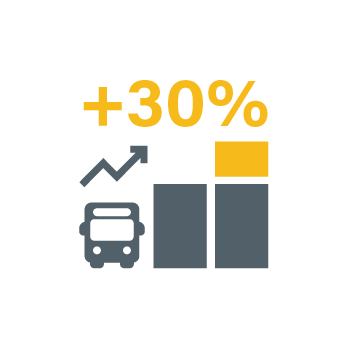
Electric buses sales grew 30% in 2024 yet they still represent only ~ 3% of global bus sales.

Electric light-commercial vehicles (vans) more than doubled in 2022-2024, reaching a 1.3% global share.

Charging infrastructure expanded rapidly – public charging points grew 40% in 2023, with fast charger installations outpacing slow installations.

Rail is the most electrified motorised transport mode, with over 15% of its energy from renewables as of 2022, the highest share among transport modes. Indian Railways reached 98% electrification in 2025. Yet, rail still accounted for only ~ 12% of global passenger transport in 2022, and its share of global freight has dropped sharply over the years.

Shipping emissions would rank as the ninth-largest GHG emitter in 2023, if counted as a country – nearly equal to all transport emissions from all countries in Africa and Latin America and the Caribbean combined.

62 green shipping corridor initiatives were announced by late 2024 – a 40% increase over 2023.

Aviation CO2 emissions are set to surpass their 2019 level in 2025, remaining the fastest growing source of emissions in some regions.

Sustainable aviation fuels (SAF) production more than doubled in 2024 but still covered only 0.3% of total aviation fuel use, projected to rise to 0.7% in 2025.
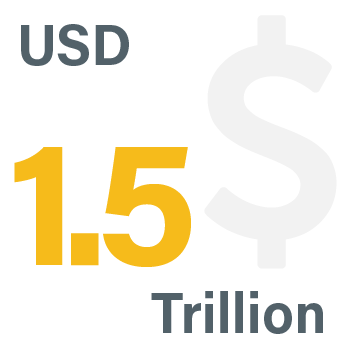
USD 1.5 trillion over 30 years will be required to meet 2050 SAF production targets.
Inequalities and Access Gaps

Only 38% of the global rural population has access to all-weather roads as of 2020— and just 31% in Africa, 35% in Latin America and the Caribbean, nearly 41% in Asia, and 42% in small island developing states (SIDS).

LMICs had 60% of the world’s vehicle fleet yet suffered 90% of the road fatalities in 2021.

In Africa, trade costs are five times the global average; a 10% drop in transport costs could increase the region’s trade volumes by 20%.

Below 40% of urban residents had convenient access to public transport in much of Africa, South Asia, and Central America in 2022, versus 80–100% in many places in Europe, Australia and New Zealand.

The under-representation of women in transport leadership roles and the sector in general perpetuates policies and systems that fail to serve half the population – Globally, women held just 15.6% of transport jobs in 2023, with only 6.5% in Africa, 13.3% in Asia, 14.2% in Latin America and the Caribbean, and over 24% in Oceania, Europe and North America.
Climate Impacts are Rising Costs and Risks for Transport Systems

Climate-related disasters cost USD 15 – 22 billion in damage to transport infrastructure every year, hitting LMICs hardest. SIDS face annual damage costs between 1% and 8% of their GDP due to natural disasters.

~ 27% of global road and rail infrastructure is exposed to such hazards, with flooding alone responsible for 73% of all damages.

Asia alone bears 60% of the global transport infrastructure damage costs.

Extreme heat caused 23 million occupational injuries and 19,000 deaths in 2022, with transport and tourism workers among the most affected.

Informal transport workers, already vulnerable to economic shocks, face severe risks and income losses when climate disasters strike.
Car-centric Systems Impose High Costs for People and the Planet

The world’s 8 billion people rely on transport to reach jobs, education or health services. There are only 1.6 billion light-duty vehicles (cars, trucks and vans). Expanding private car use for all is physically and environmentally impossible due to resource, space and climate limits.

Public transport ridership has yet to recover from the pandemic: over half of operators reported 2024 passenger levels still below 2019, while informal transport providers remain under-recognised and under-supported.

SUVs made up nearly half of all car sales in 2023, consuming more energy, worsening emissions, reducing safe public space for walking and cycling, and increasing the risk of death and injury in road incidents, compared to smaller size cars.

Traffic congestion has not only returned but worsened since 2022, fuelling air and noise pollution, community isolation and sedentary lifestyles.
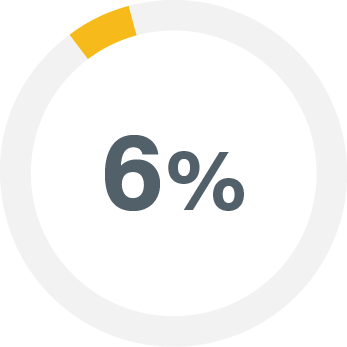
Transport is responsible for 6% of global air pollution (2019), although this share varies widely by region.

Road traffic injuries are the leading cause of death for people aged 5–29, with 1.19 million fatalities and over 50 million injuries annually — costing the global economy USD 3.6 trillion, or 3.7% of global GDP (2021).
Investment Gaps Hamper a Just Transition
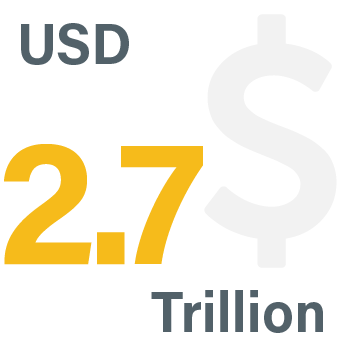
Meeting climate targets in transport will cost an estimated USD 2.7 trillion annually until 2050 – seven times the investment levels in transport in 2023.

LMICs in Africa and Asia face the largest investment gaps

In 2023, only 3.4% of the USD 1.9 trillion in climate finance was directed towards adaptation (USD 65 billion), and of this, just 2.7% (USD 1.8 billion) went to transport adaptation and resilience despite the growing risks.

A just transition must protect the rights and livelihoods of transport workers, who are essential to maintaining economic development and mobility access worldwide.