Executive Summary: Transport at SB64 — What You Need to Know
Transport is off-track for 1.5°C but central to delivering the Global Stocktake and meeting the Paris targets. SB64 is a key moment to lock transport into the core of implementation and finance discussions.
1. Anchor GST-1 Implementation in a Global Goal for Transport
GST-1 calls for transitioning away from fossil fuels and reducing road transport emissions, but transport finance and policy remain fragmented. SLOCAT and partners urge Parties to:
- Recognise and support a quantified Global Goal for Transport as a “North Star” for
GST‑2, NDCs, NAPs and the UN Decade of Sustainable Transport. - Endorse and reference the Ministerial Declaration on Resilient and Low‑Emissions
Transport (25% transport energy demand reduction by 2035; one‑third
renewable/sustainable fuels) – launched at COP30 and already signed up to by 11
countries. - Translate the COP30 Presidency’s TAFF Roadmap into actionable national strategies,
incorporating non-state actor inputs and ensuring transport plays a central role in
driving the transition away from fossil fuels. - Use the forthcoming SLOCAT-coordinated “Global Transport Stocktake” of
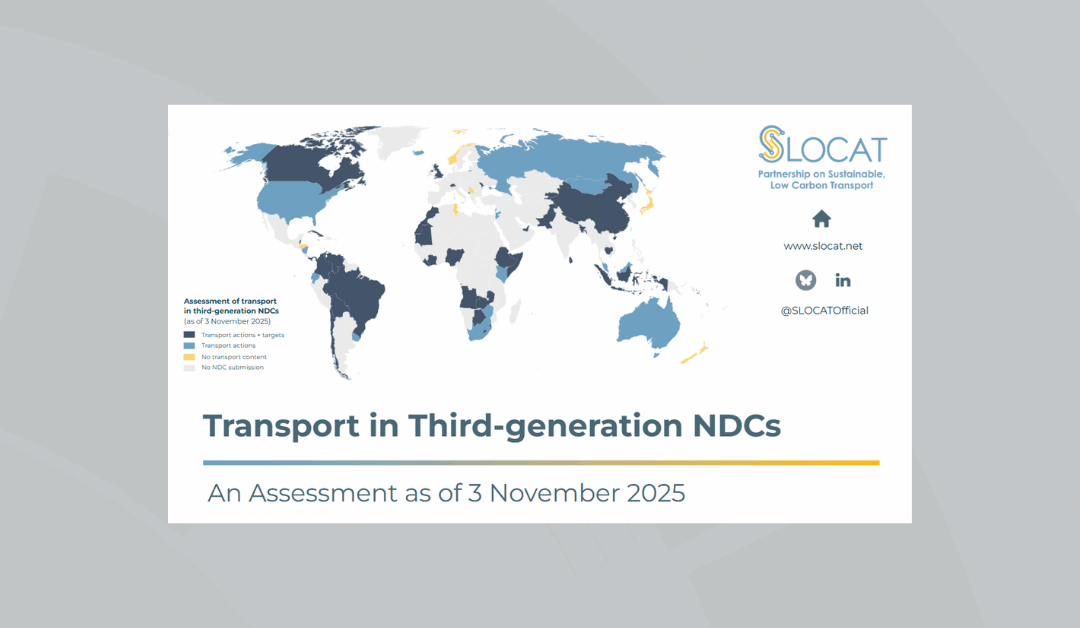
NDCs/NAPs as a technical input to GST‑2 and implementation dialogues.
2. Fix the Finance Gap and Realign Flows under Article 2.1(c)
Transport needs around USD 2.7 trillion per year to 2050 (7x current investment), yet only a fraction of climate finance reaches the sector, while around USD 7 trillion still supports fossil subsidies. At SB64, negotiators can:
- Use the Veredas Dialogue and UAE Dialogue to push time-bound fossil fuel subsidy phase-out in transport and redirect flows to low-carbon, resilient mobility.
- Earmark climate finance for sustainable transport, and develop transport-sensitive access criteria so cities and LMICs can actually draw on funds.
- Activate Article 6 carbon markets to make low-carbon passenger and freight projects bankable.
3. Treat Transport as a Core Delivery Sector for Mitigation, Adaptation and Just Transition
Only around 3% of adaptation finance reaches transport, despite extreme exposure to climate risks and huge economic losses when systems fail. Negotiators and stakeholders can:
- Elevate resilient transport infrastructure in the Baku Adaptation Roadmap, GGA indicators, and Adaptation Fund discussions.
- Integrate transport metrics into Belém Adaptation Indicators and NAPs.
- Use the Just Transition Work Programme to move beyond vehicle technology towards people-centred, affordable, accessible mobility.
4. Leverage Systemic Levers: Country Champions, Energy Nexus, and PAS
- Invite “Transport Country Champions” and regional roundtables to turn COP signals into on-the-ground phase-out timelines and infrastructure pipelines.
- Promote joint transport and energy sessions and ministerials (COP31 to COP32) to synchronise renewables, electrification and fossil fuel phase-out.
- Acknowledge transport Plans to Accelerate Solutions (PAS) under the Climate Action Agenda as implementation partners for NDCs, NAPs and GST-1 outcomes, and invite their technical inputs into SB64 dialogues.