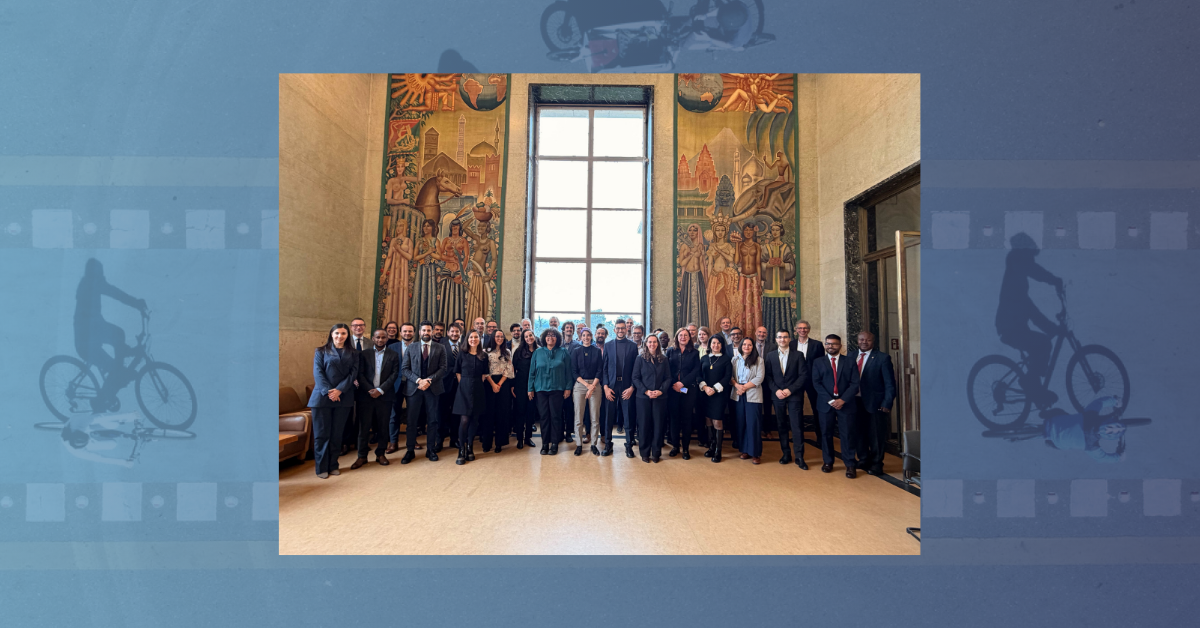
A landmark multistakeholder workshop co-convened by SLOCAT, Climate Compatible Growth, and UNECE will lay the foundations for tracking global progress on sustainable transport, supporting the 2026–2035 Decade in delivering real-world impact for people and the planet.
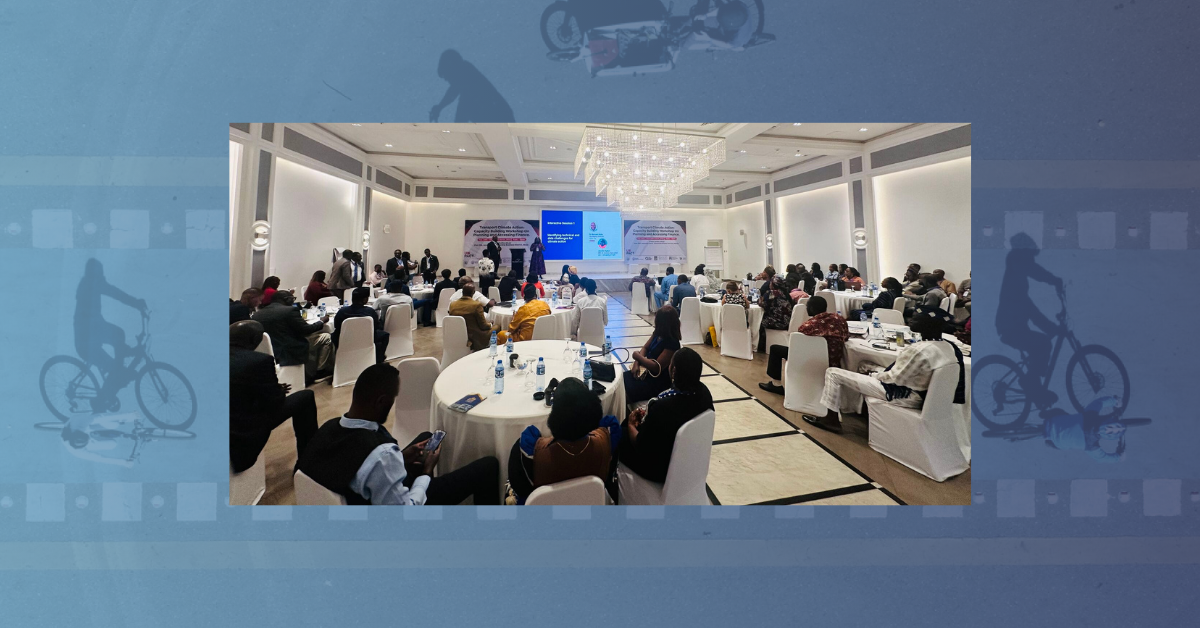
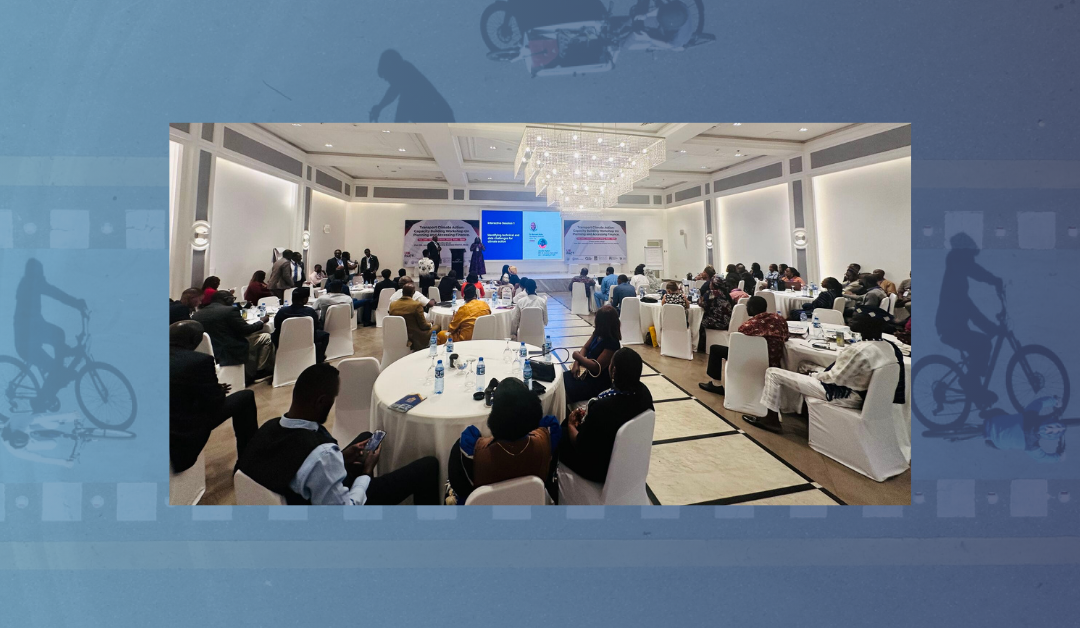
Geneva, 19 February 2026 – The first-ever UN Decade of Sustainable Transport (2026–2035) has officially begun, and with it a decade of urgency and opportunity: to transform how the world moves people and goods in ways that are inclusive, low-carbon and resilient. A central test now facing the whole transport community is whether they can deliver this transformation at the necessary speed and scale – and whether progress can be measured in a clear and accountable way at global scale. Today, leading experts, practitioners and policymakers meet at the United Nations Palais des Nations in Geneva for a high-level multistakeholder workshop to tackle that challenge head-on: agreeing how to monitor, track and report global progress on implementing the UN Decade of Sustainable Transport.
Convened by SLOCAT, Climate Compatible Growth (CCG), and the UN Economic Commission for Europe (UNECE), in collaboration with the Asian Development Bank (ADB), the Foreign & Commonwealth Office, ITDP, IDRC Canada, and the World Resources Institute, the workshop is being held in parallel with the 88th session of the UNECE Inland Transport Committee, placing it at the very heart of global transport governance at the dawn of a decisive decade.
Transport is the connective tissue of our economies and societies, yet it remains one of the fastest-growing sources of greenhouse gas emissions globally, responsible for nearly 16% of total GHG emissions and 22% of global CO₂. Billions of people in low- and middle-income countries still lack access to safe, affordable, and reliable transport. The UN Decade of Sustainable Transport represents a once-in-a-generation political opportunity to change course, but only if progress can be measured, tracked, and acted upon.
“What gets measured is prioritised, and what is prioritised gets done. We don’t need a monitoring framework for change to occur; we need one to ensure the right change happens, for the right people, at the right pace. Hitting a 1.5°C‑aligned trajectory in one of the world’s top‑emitting sectors is not something we can leave to chance. We must be able to prove where we are on track and where we are not. The UN Decade of Sustainable Transport gives the world a 10-year mandate to transform mobility, but ambition without measurement is merely aspiration. This workshop is about building the architecture that turns political commitments into trackable, accountable progress.”
Carly Gilbert-Patrick, Secretary General, SLOCAT

A Framework for Accountability at the Dawn of the Decade
The one-and-a-half-day workshop builds directly on two previous SLOCAT-co-convened events: the Multi-Stakeholder Workshop of March 2025, which shaped early contributions to the Decade’s preparation, and the Think-tank Session of December 2025, which focused on operationalising the Decade’s Implementation Plan. This third gathering takes the critical next step, initiating the collaborative work needed to design a knowledge-driven monitoring and tracking framework that reflects diverse global contexts and serves both accountability and learning functions.
Through World Café-style discussions, group exercises, and structured plenary sessions, participants will explore four critical dimensions of framework design: Governance, Stakeholder Engagement & Resources; Framework Design & Strategic Alignment; Indicator Architecture & Equity Principles; and Data Systems & Monitoring Infrastructure. Crucially, the workshop will draw lessons from comparable global monitoring efforts, including the WHO’s Decade of Action for Road Safety and SDG 11 indicator tracking under UN-Habitat, learning what works, what doesn’t, and what the sustainable transport community must do differently.
Centering Equity, Data, and Action
A central priority of the workshop is ensuring that the monitoring and tracking framework serves not only high-income countries with established data systems, but equally, and urgently, the low- and middle-income countries where transport systems are still under development for some, and where the decisions made in this decade will either lock in sustainable or unsustainable trajectories for generations. Special attention will be paid to capacity-building needs, data partnerships, and governance models that are inclusive and practically implementable across diverse national contexts.
The second day of the workshop will focus on the institutional architecture needed to sustain monitoring over the Decade’s full ten-year span, exploring data partnerships, platform options for sharing and synthesising transport data globally (building on initiatives such as the Transport Data Commons, an open-access collaborative platform for transport-related datasets), and governance models that ensure broad ownership across the UN system, civil society, and national governments.
“With the Decade now underway, we have a narrow but real window to get the monitoring architecture right from the start. That means designing frameworks that are ambitious yet actionable, comprehensive yet practical, and above all, built with the countries that need them most at the table.”
Holger Dalkmann, Team Lead, Climate Compatible Growth
Building Blocks for Success
The workshop is expected to produce concrete recommendations for a monitoring and tracking framework to be developed throughout 2026, including approach to indicator selection, institutional arrangements and governance, and identified partnerships for data collection and analysis. A national government consultation with member states of the UNECE Inland Transport Committee will be integrated directly into the programme, ensuring that the framework reflects the realities and priorities of countries.
The workshop’s outcomes will feed directly into the broader international effort led by the UN Department of Economic and Social Affairs (UNDESA) and the UN Regional Commissions to operationalise the global Implementation Plan for the Decade, a plan already launched, but whose real-world impact will depend entirely on the strength of its delivery and monitoring and accountability mechanisms built to support it. The stakes could not be higher: transport is central to achieving the Sustainable Development Goals, from climate action and clean energy to reduced inequalities and sustainable cities for people and the planet.
About SLOCAT
SLOCAT accelerates the transformation of transport systems and services towards inclusive, healthy, green and resilient solutions for people and the planet
SLOCAT provides collaborative data and evidence-based knowledge, action initiatives, political strategies, dialogue, and strategic communications. This helps build collective thought leadership and advocacy at the crossroads of transport, sustainability, climate and social justice issues. SLOCAT emphasises all land transport modes with universal analyses and actions, especially for low- and middle-income countries.
About Climate Compatible Growth
CCG is a UK Aid-funded project which aims to support investment in sustainable energy and transport systems to meet development priorities in the Global South. The programme brings together some of the UK’s leading universities including UCL, Oxford, Cambridge, Imperial College, Strathclyde and the Open University, with the Centre for Global Equality, KTH Royal Institute of Technology, and Climate Parliament. It is directed from the Centre for Sustainable Transitions: Energy, Environment, and Resilience (STEER), at Loughborough University. Our team includes experts in practical, applicable research in sustainable development and related topics. Although our main focus is funded by UK Aid, we are always happy to make our work available to other countries who may need our support.
Media Contact
Angela Enriquez, Senior Advisor | angela.enriquez@slocatpartnership.org
Jules Vincent, Campaigner & Communications Specialist | jules.vincent@partnership.org