Decisions on transport policies and investments determine whether economies can grow and communities become more inclusive while reducing emissions and improving air quality. While countries may start from different contexts, a quantified global goal for transport will provide a shared direction for expanding inclusive, climate-compatible, and resilient transport systems and services worldwide. It will drive coordinated action at scale and enable solutions tailored to local needs for lasting impact.
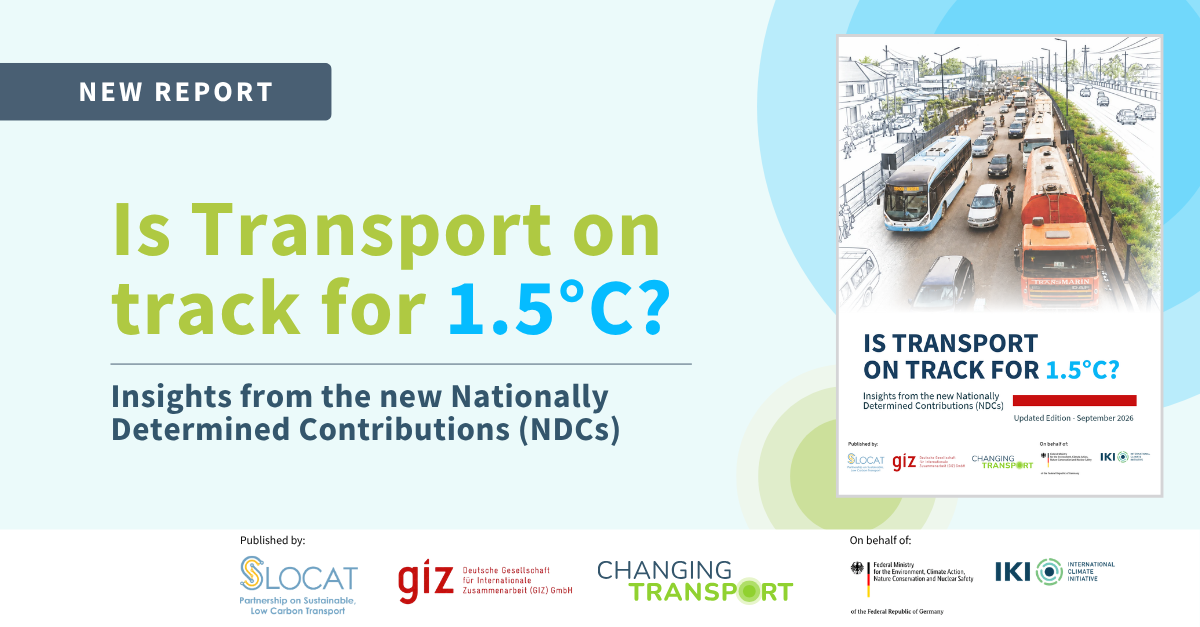
Transport is the lifeline of our societies and economies connecting people and the economies, yet the sector is a leading contributor to emissions. In 2023, it remained the second largest and fastest growing emitting sector – responsible for 15.9% of global GHG emissions and 21.9% of global CO₂ emissions – and consumed 27% of global energy for end-uses, with fossil fuels accounting for 95.4% of energy used in transport. According to IPCC transport emissions need to drop at least by 59% by 2050 compared to 2020 levels to stay within 1.5°C warming.
Moreover, the sector is increasingly vulnerable to climate impacts, with natural disasters provoking up to USD 22 billion annually in damages to transport infrastructure and assets, with low- and middle-income countries (LMICs) suffering the hardest hit. Meanwhile, billions of people remain excluded from affordable, safe, and sustainable mobility. High costs of moving goods in many LMICs and rural areas hinder trade volumes, limit the availability of goods and increase their final price.
Closing persistent gaps in inclusive access to transport while sharply reducing emissions is urgent: Achieving this will require a transport paradigm shift and a massive scale-up in investment, with annual cost estimated at USD 2.7 trillion until 2050 — seven times current levels. With many transport systems in LMICs still developing, the next decade is a decisive window to avoid locking in inefficient systems and to steer transport towards resilience, inclusion, and climate compatibility.
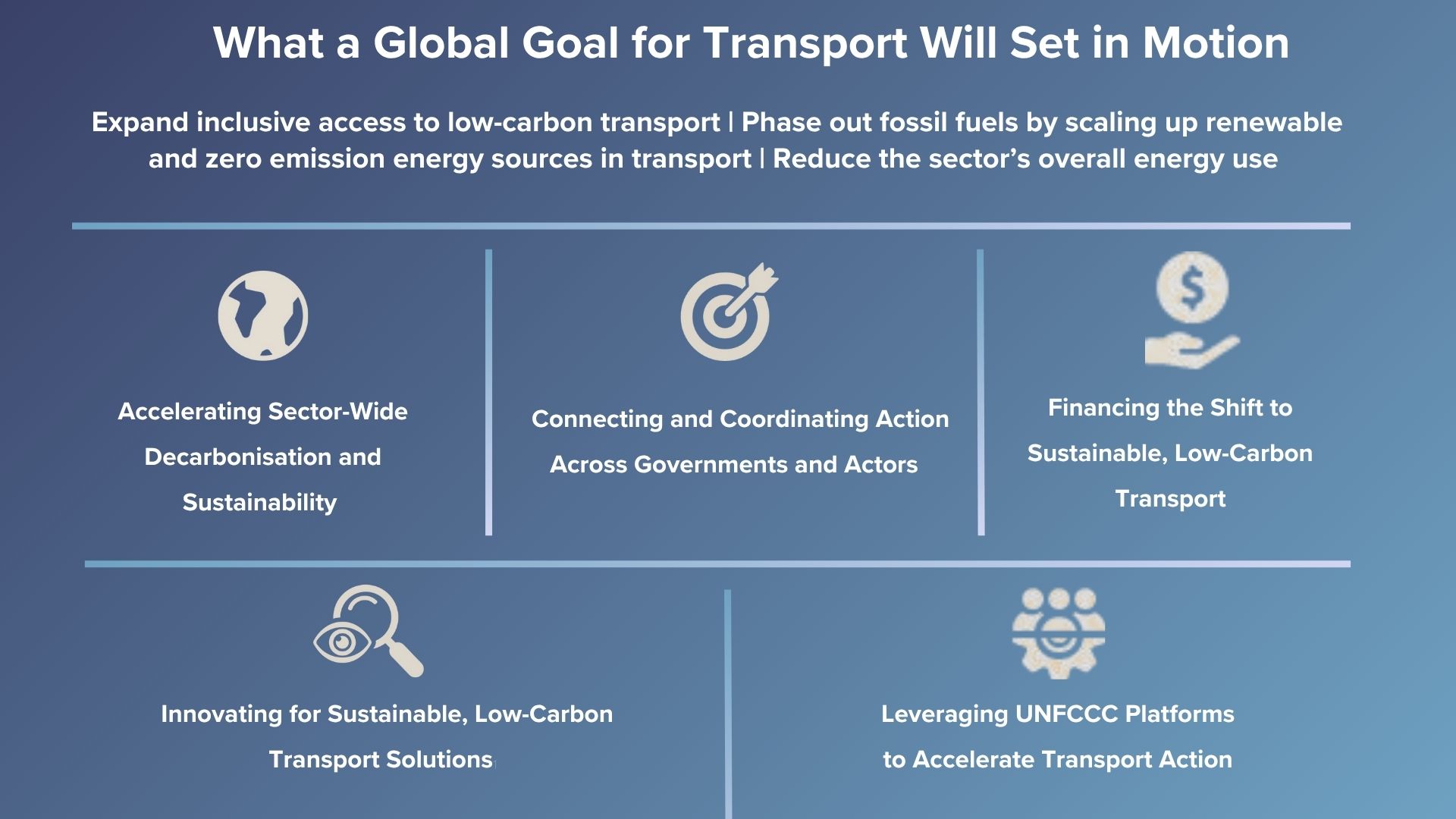
What a Global Goal for Transport Will Set in Motion
Expand inclusive access to low-carbon transport | Phase out fossil fuels by scaling up renewable and zero emission energy sources in transport | Reduce the sector’s overall energy use
- Accelerating Sector-Wide Decarbonisation and Sustainability
A call for policymakers, investors, and industry to fast-track the shift to more inclusive, cleaner and future-ready options across all transport modes - Connecting and Coordinating Action Across Governments and Actors
A shared framework to align and coordinate climate and sustainability action in transport across national and subnational governments and stakeholders – strengthening both individual and collaborative efforts, and fostering international cooperation - Financing the Shift to Sustainable, Low-Carbon Transport
A clear signal to guide investment and climate finance pathways that de-risk investment and empower low- and middle-income countries to lead the transition - Innovating for Sustainable, Low-Carbon Transport Solutions
Stimulating innovation and incentivising the development of new, cost-effective technologies and business models that deliver sustainable, low-carbon solutions across all transport modes - Leveraging UNFCCC Platforms to Accelerate Transport Action
Advancing sector-specific negotiations that turn broad climate commitments into actionable transport sustainability and decarbonisation pathways – driving consensus and coordination, mobilising resources, and ensuring measurable progress toward climate goals