Shanghai- 22 October 2014
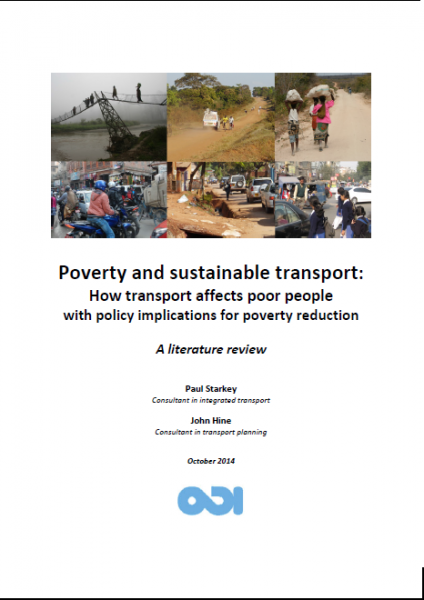 The Partnership on Sustainable, Low Carbon Transport together with United Nations Human Settlements Programme (UN-Habitat) and Overseas Development Institute published a Literature Review on poverty and sustainable transport titled; “Poverty and Transport: How transport affects poor people with policy implications for poverty reduction”. This literature review was written by John Hine and Paul Starkey.
This review of the poverty implications of urban and rural transport was requested by the Partnership on Sustainable, Low Carbon Transport (SLoCaT), contracted by UN‐Habitat and implemented by the Overseas Development Institute (ODI) with funding from UK Department of International Development (DFID). The research questions concerned the extent to which the poor can participate in the transport sector, benefit from transport and be adversely affected by transport externalities. About 360 documents were reviewed, most of which are in English and available on the internet. A significant proportion of the documents were produced by, or in association with, a relatively small number of international and ‘northern’ development agencies, including multilateral development banks (World Bank and ADB) and DFID‐supported research programmes.
The literature review is part of the SLoCaT Collaborative Work Program on Transport and Poverty supported by members of the SLoCaT Partnership.
Please see: Full text of the Literature Review