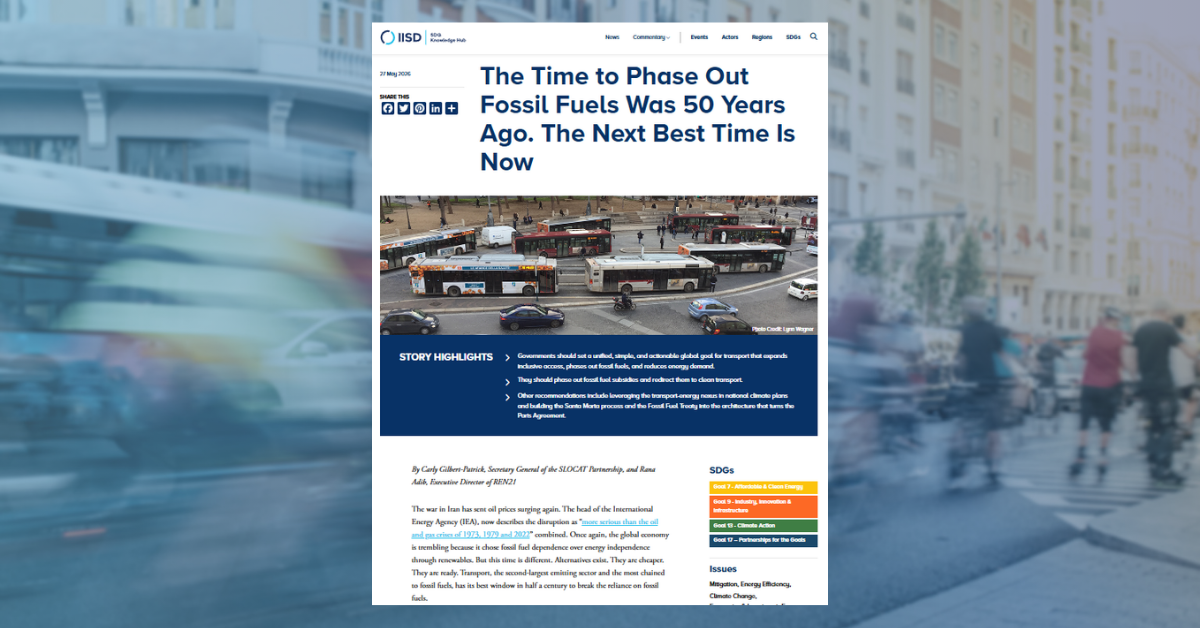
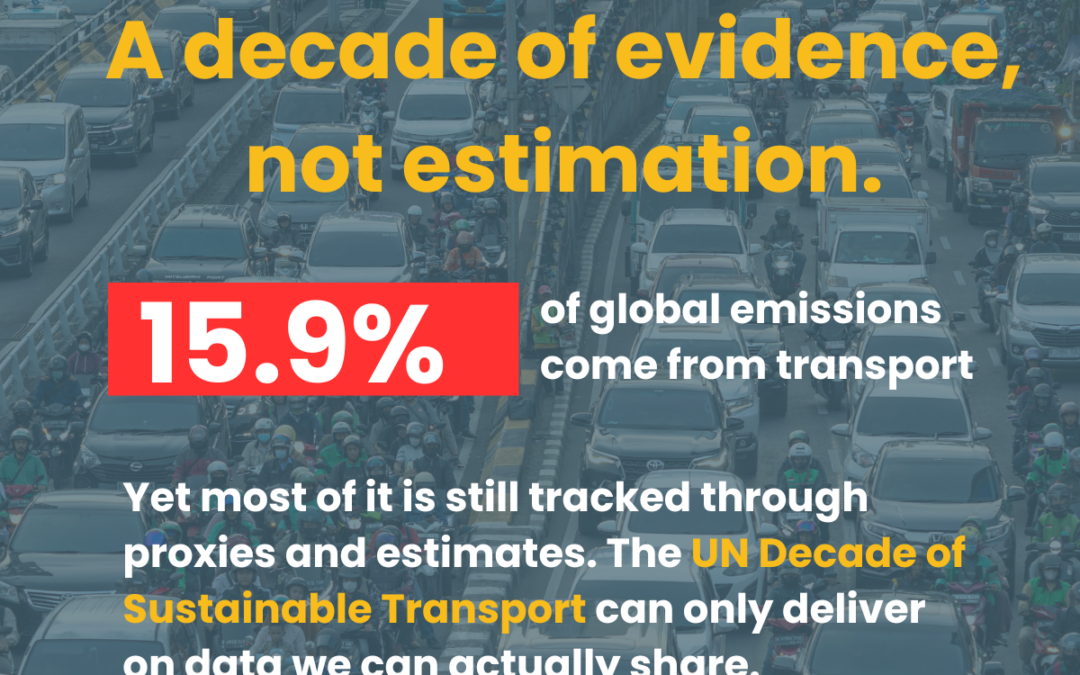
On October 30th the world welcomed Danica May Camacho as the world’s 7th billion inhabitant. She joined the world in Manila, one of the fastest growing megacities in the world. Manila typifies in many respects what is wrong with transport in developing countries. Streets that are choked with cars, motorcycles and other vehicles that make it unsafe for children like Danica to breathe the air or cross the streets.
Yet, transport plays an important role in providing access to jobs, markets and schools. Cities like Manila will have to improve their transport infrastructure and services to improve the quality of life in the city and to lift more people from poverty. The manner in which Manila and thousands of other cities in the developing world develop their transport will determine the sustainability of urban life in coming decades for Danica and her future children.
Global sustainability is the focus of the Rio+20 UN Conference on Sustainable Development which will be held in June 2012 in Rio de Janeiro, 20 years after the first global conference on sustainable development. The outlook for the transport sector is bleak, especially in developing countries. Car ownership will triple to over 2 billion, and trucking will quadruple up to 2050 as forecasted by the International Transport Forum with the bulk of the growth happening in the developing world. While road fatalities in the developed world have gone down they are projected to rise by 80 percent by 2020 in low and middle level income countries. Air pollution from transport is an important contributor to the 500,000 persons in the developing world who die annually because of ambient air pollution. CO2 emissions from transport, an important contributor to climate change, are expected to grow 80 percent with most of the growth coming from the developing world.
Concern on the growing lack of sustainability of transport in developing world led in 2009 to the establishment of the Partnership on Sustainable Low Carbon Transport (SLoCaT), which is a UN registered partnership.
To help shape the outcome of the Rio+20 conference the SLoCaT Partnership today released its call to the United Nations urging adoption by the Rio+20 conference of a Sustainable Development Goal that calls on the world to “Achieve sustainable transport that enables universal access to safe, clean, and affordable mobility”.
“The technologies and policies needed to make transport more sustainable are well known, and have proven to be effective, and in many cases come at net-negative cost when all the different benefits are counted” says Vera Lucia Vicentini, principal transport specialist at the Inter-American Development Bank and the current chair of the SLoCaT Partnership.
To measure progress towards sustainable transport SLoCaT proposes targets and indicators which include: global transport greenhouse gas emissions should peak latest by 2020 and be cut by at least 40 percent by 2050 compared to 2005 levels. Traffic-related deaths are to be cut in half by 2025. The mode share of urban public transport by 2025 should be doubled relative to 2010 and we should boost walking and cycling.
The SLoCaT submission was supported by 20 organizations representing development organizations, non-governmental organizations and private sector organizations. These include the African Development Bank, Asian Development Bank, Centro de Transport Sustenable de Mexico, Clean Air Initiative for Asian Cities, Corporación Andina de Fomento, Inter American Development Bank, International Energy Agency, International Association of Public Transportation, Institute for Transportation and Development Policy, the Stockholm Environment Institute and Veolia Transdev.
“It’s significant that such a wide array of groups agree that sustainable transport needs to be recognized by the world’s governments as a fundamental goal for sustainable development. The upcoming Rio+20 Sustainable Development Conference in June 2012 will provide an important opportunity to better align international cooperation and investment to boost economic growth, equity and the environment,” said Michael Replogle, Global Policy Director and Founder of the Institute for Transportation and Development Policy. “With a majority of the world’s 7 billion people now living in cities, it’s time to focus transport investment and policy on producing safe, clean, low-carbon, affordable transport.”
For further information please contact Cornie Huizenga, Joint Convenor of the SLoCaT Partnership at cornie.huizenga@slocatpartnership.org. For information on SLoCaT see www.slocat.net
See www.uncsd2012.org for information on the Rio+20 UN Conference on Sustainable Development
See http://www.slocat.net/rio-plus-20 for the full text of the SLoCaT submission to the Rio+20 Conference and an overview of other transport related submissions