
It’s Now or Never For Climate and Sustainability Action in Transport
Transport connects people, goods, and economies — it’s how people access jobs, education and health services, food reaches markets, and economic activity happens. The sector accounted for roughly 7% (USD 6.8 trillion) of global GDP and employed nearly 200 million people worldwide in 2021, yet it’s also one of the largest sources of greenhouse gas and carbon dioxide emissions and among the most exposed to climate risks like flooding and heat. Meanwhile, persistent gaps remain in inclusive access to reliable, efficient, and affordable transport, leaving billions of people worldwide in situations of inequality and transport poverty, while limiting the economic development of countries. Clean transport will require an estimated USD 2.7 trillion annually until 2050 – seven times current spending. With many transport systems in low- and middle-income countries still developing, the next decade is a decisive window to avoid inefficient investments and costly retrofits. COP30 is a pivotal opportunity to accelerate the sector’s role in advancing climate and sustainability goals, driving coordinated action for lasting impact.
Transport in COP30 Outcomes
COP30 Belém was dubbed as the “implementation COP”, after years of negotiations on the Paris Agreement rules and amidst mounting climate change impacts worldwide. While it kept the global climate process alive at a time of strained multilateralism, it fell short of implementation expectations. Limited ambition from major emitters, geopolitical tensions, and disputes over trade slowed formal negotiations among countries. The lack of reference to a fossil fuels transition in the final decision – the Global Mutirão – was widely seen as anachronistic, at best and underscored the disconnect between growing political support and negotiated outcomes. It also marked a departure from the strong signals agreed by countries at the first Global Stocktake, and played a major role in preventing agreement on how to close the gap between pledges and what science demands.
It’s Now or Never For Climate and Sustainability Action in Transport
Transport connects people, goods, and economies — it’s how people access jobs, education and health services, food reaches markets, and economic activity happens. The sector accounted for roughly 7% (USD 6.8 trillion) of global GDP and employed nearly 200 million people worldwide in 2021, yet it’s also one of the largest sources of greenhouse gas and carbon dioxide emissions and among the most exposed to climate risks like flooding and heat. Meanwhile, persistent gaps remain in inclusive access to reliable, efficient, and affordable transport, leaving billions of people worldwide in situations of inequality and transport poverty, while limiting the economic development of countries. Clean transport will require an estimated USD 2.7 trillion annually until 2050 – seven times current spending. With many transport systems in low- and middle-income countries still developing, the next decade is a decisive window to avoid inefficient investments and costly retrofits. COP30 is a pivotal opportunity to accelerate the sector’s role in advancing climate and sustainability goals, driving coordinated action for lasting impact.
Five Transport Priorities for Climate and Sustainability Action at COP30
SLOCAT calls on COP30 to prioritise progress on five transport priorities for climate and sustainability action:
- Commit to a Structured Process for Setting a Global Transport Goal
- Deliver Bold Transport NDCs to Supercharge Climate Action
- Scale up Climate Finance in Sustainable Transport to Power Change
- Prioritise Transport Adaptation and Resilience to Protect Communities and Economies
- Leverage Key UNFCCC Platforms to Accelerate Transport Action
Our Flagship Activities for COP30
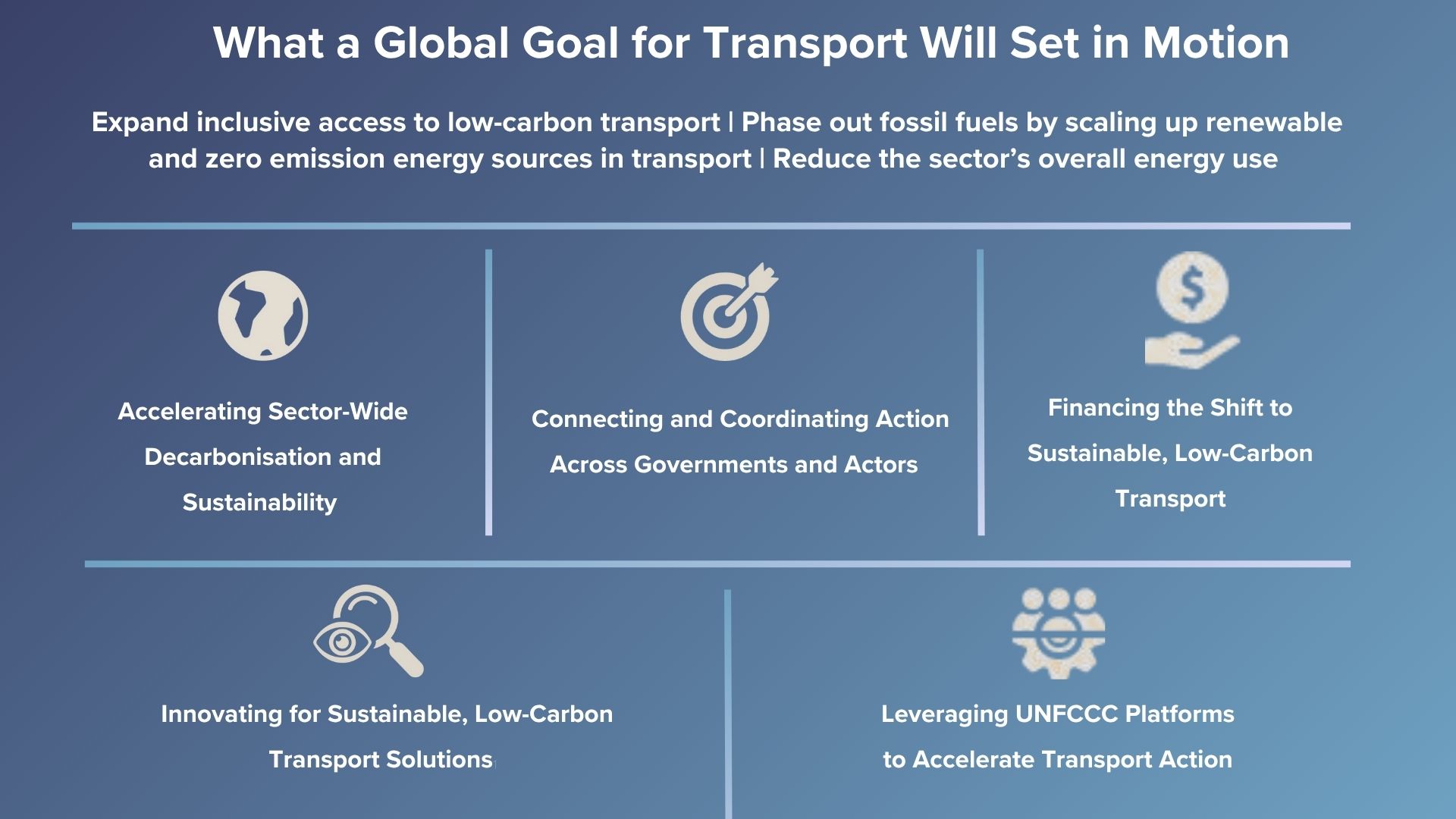
Time to Set a Global Goal for Transport
Decisions on transport policies and investments determine whether economies can grow and communities become more inclusive while reducing emissions and improving air quality. While countries may start from different contexts, a quantified global goal for transport will provide a shared direction for expanding inclusive, climate-compatible, and resilient transport systems and services worldwide. It will drive coordinated action at scale and enable solutions tailored to local needs for lasting impact. On the road to the first-ever UN Decade of Sustainable Transport (2026-2035), and to implement what countries agreed at the first Global Stocktake of the Paris Agreement in 2023, we need clear ministerial leadership to guide the many actors eager to set a global goal for transport. National and sub-national governments, business, and civil society are ready to act but without coordinated direction and multi-level governance, efforts risk fragmentation. Ministers can set the vision, align incentives, and channel this momentum into a structured process toward setting a global goal for transport.

Five-Point Plan for Transport in NDCs

NDC Transport Tracker and Analysis
The NDC Transport Tracker by GIZ and SLOCAT enables you to get a clear picture of transport ambition, targets and policies in countries’ Nationally Determined Contributions (NDCs) and Long-Term Low GHG Emission Development Strategies (LTS-LED) - the two most important instruments of the Paris Agreement to limit global warming to well below 2°C. The Tracker is being updated constantly. The newest NDCs and LTS are added once published on the submissions portal of the United Nations Framework Convention on Climate Change (UNFCCC).Check the NDC Transport Tracker
Read the second analysis about Transport in the New NDCs as of November 2025
NDCs Library: Resources and tools from transport expert organisations to help raise transport ambition in the next generation of NDCs, aligned with the first Global Stocktake under the Paris Agreement
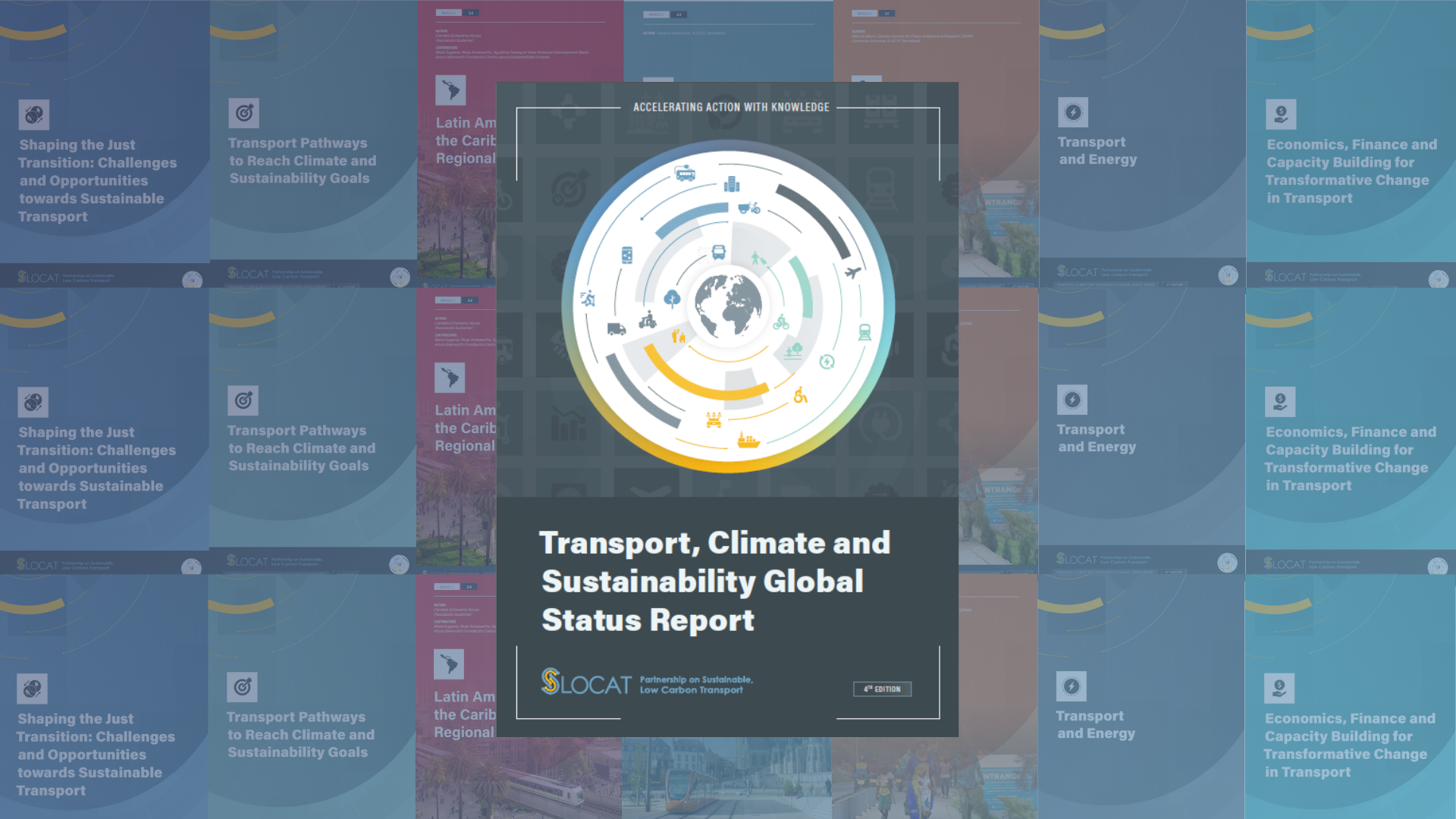
Transport, Climate and Sustainability Global Status Report– 4th Edition
The GSR is your one stop-hub for the latest data, trends, and policies shaping sustainable transport worldwide, covering demand, use and access to transport; climate and sustainability trends; and policy and investment developments. The goal? Equip decision-makers and actors within and beyond transport with an assessment of where we stand, and knowledge for faster, bolder action.

Transport Energy Nexus Memo
Energy and transport are deeply interconnected: Transport relies on energy to move people and goods, and energy systems evolve in response to transport needs. As economies grow, transport increases demand for fuels, electricity, and infrastructure. The energy sector underpins energy supply, while the transport sector drives energy demand. Aligning and accelerating decarbonisation and sustainability actions across these two sectors is crucial: progress in one unlocks transformative opportunities in the other.
Transport electrification and renewable fuels for transport lie at the heart of decarbonising energy and transport systems. Renewable energy systems enable sustainable transport through cleaner and more efficient energy supply. Transport acts as both a driver and enabler of the clean energy transition. Shifting transport away from fossil fuels helps countries strengthen energy security, build resilience to global shocks, and reduce the costs of fuel imports and exposure to volatile energy markets.
Time to Set a Global Goal for Transport
Five-Point Plan for Transport in NDCs
NDC Transport Tracker and Analysis
The NDC Transport Tracker by GIZ and SLOCAT enables you to get a clear picture of transport ambition, targets and policies in countries’ Nationally Determined Contributions (NDCs) and Long-Term Low GHG Emission Development Strategies (LTS-LED) – the two most important instruments of the Paris Agreement to limit global warming to well below 2°C. The Tracker is being updated constantly. The newest NDCs and LTS are added once published on the submissions portal of the United Nations Framework Convention on Climate Change (UNFCCC).Check the NDC Transport Tracker
Read the preliminary analysis about Transport in the New NDCs as of May 2025
NDCs Library: Resources and tools from transport expert organisations to help raise transport ambition in the next generation of NDCs, aligned with the first Global Stocktake under the Paris Agreement
Transport, Climate and Sustainability Global Status Report– 4th Edition
The GSR is your one stop-hub for the latest data, trends, and policies shaping sustainable transport worldwide, covering demand, use and access to transport; climate and sustainability trends; and policy and investment developments. The goal? Equip decision-makers and actors within and beyond transport with an assessment of where we stand, and knowledge for faster, bolder action.
COP30 Transport Pavilion
If you are heading to Belém, let’s meet at the first-ever Transport Pavilion in COP Blue Zone, where leading expert organisations, NGOs, academia, private sector actors, philanthropies, and governments will champion transport’s vital role in climate and sustainability
If you are heading to Belém, let’s meet at the first-ever Transport Pavilion in COP Blue Zone, where leading expert organisations, NGOs, academia, private sector actors, philanthropies, and governments will champion transport’s vital role in climate and sustainability
